Why Melbourne Businesses Are Leaving Money on the Table With the Wrong Web Platform

Last updated: 2026-08-06
Learn how the wrong web platform limits enquiries, inflates ad spend, and blocks growth before a single marketing dollar is spent.
In Melbourne, businesses running on template-based or outdated web platforms consistently leave revenue on the table, not because their marketing is wrong, but because their platform cannot support what their business actually needs to do.
At IT BOOST Australia, we see and have solved this from both sides. As we build custom web platforms for Melbourne businesses either upgrading an existing site or starting from scratch and wanting to get the foundation right, in both situations, the question is the same: can your web platform actually support what your business needs to achieve?
The Wrong Web Platform Can Cost More Than You Think
When choosing a website platform, businesses often focus on the initial cost and appearance. A website is a significant investment, and businesses want something that looks professional without unnecessary expense.
However, the upfront cost is only part of the equation.
A platform that appears affordable initially can become expensive if it requires ongoing workarounds, excessive plugins, third party integrations or regular fixes to deliver functionality your business needs.
Over time, these limitations can affect:
- Website speed and performance
- SEO performance
- Lead generation
- User experience
- Advertising results
- Internal website management
- Integration with business systems
- Ability to introduce new functionality
A website should support your business processes rather than force your business to work around the limitations of the platform.
What the Right Platform Actually Needs to Do
The right platform starts with the business requirements, not a template selection.
Melbourne businesses operate across vastly different models, and the gap between what a template provides and what a business actually needs becomes more expensive over time.
IT BOOST Australia team has built custom web functionality for our local Melbourne businesses clients including:
Custom Quoting and Pricing Calculators
A Melbourne web store client required a checkout calculator applying tiered pricing formulas based on product volume, delivery zone, and material specifications. Shopify's native checkout simply could not replicate this without third-party apps introducing performance overhead and recurring licence costs. Our web design team built the calculator directly into the platform — no apps, no dependencies, no additional monthly cost.
Another trade business needed customers to submit job details online and receive a qualified price range before the enquiry reached the sales team. The result was fewer unqualified calls and more detailed, conversion-ready leads arriving through the website.
Dynamic Pricing Systems
A client selling services across multiple variables, location, duration, service tier needed pricing that updated in real time based on customer selections. A static contact form was losing enquiries to competitors with more interactive tools. Our custom pricing engine replaced three separate tools the business had been paying for individually.
Industry-Specific Booking Systems
A hospitality business needed live table availability connected directly to their internal system, not a third-party widget that redirected customers off-site. A healthcare business needed a booking flow that routed different enquiry types to different team members based on intake answers. Both required custom development that template platforms could not support without significant structural compromise.
Business System Integrations
Connecting a website to a CRM, inventory system, or internal database requires clean, documented API integration, not a plugin that breaks during the next platform update. IT BOOST Australia's web design team integrates Melbourne business websites directly with existing business systems, removing the manual data entry that template-to-tool connections typically leave behind.
These are not edge cases. They are the standard requirements of Melbourne businesses that have outgrown what template platforms were designed to handle.
Where Template Platforms Hit Their Ceiling
WordPress, Shopify, Squarespace, and similar platforms are practical starting points. The problem is structural, not operational, every template platform was designed for a generalised use case, and customisation beyond that use case requires workarounds.
Each workaround introduces a dependency, each dependency requires maintenance and each maintenance cycle introduces the risk of conflicts, security vulnerabilities, and performance degradation.
The pattern IT BOOST Australia sees most consistently among businesses approaching a migration: a WordPress site that launched with six plugins and now runs on twenty-three, with a page speed score that has declined every year and a developer who charges a minimum callout fee every time something breaks after an update.
The cost of keeping a template platform functional at scale frequently exceeds the cost of building the right platform from the beginning.
A custom platform eliminates plugin dependency for core functionality. Performance, security, and SEO architecture are built into the codebase, not bolted on through extensions that were written by third parties and maintained on third-party timelines.
How Website Infrastructure Directly Affects SEO and Ad Performance
A website's platform determines how well it can support SEO, and most Melbourne businesses investing in SEO on a template platform are working against a structural headwind.
Google evaluates six technical signals that are directly influenced by platform quality: page loading speed, mobile usability, crawlability, Core Web Vitals performance, content structure, and security stability. Template platforms with accumulated plugins consistently underperform on loading speed and Core Web Vitals, the two signals where Google has been most explicit about ranking consequences.
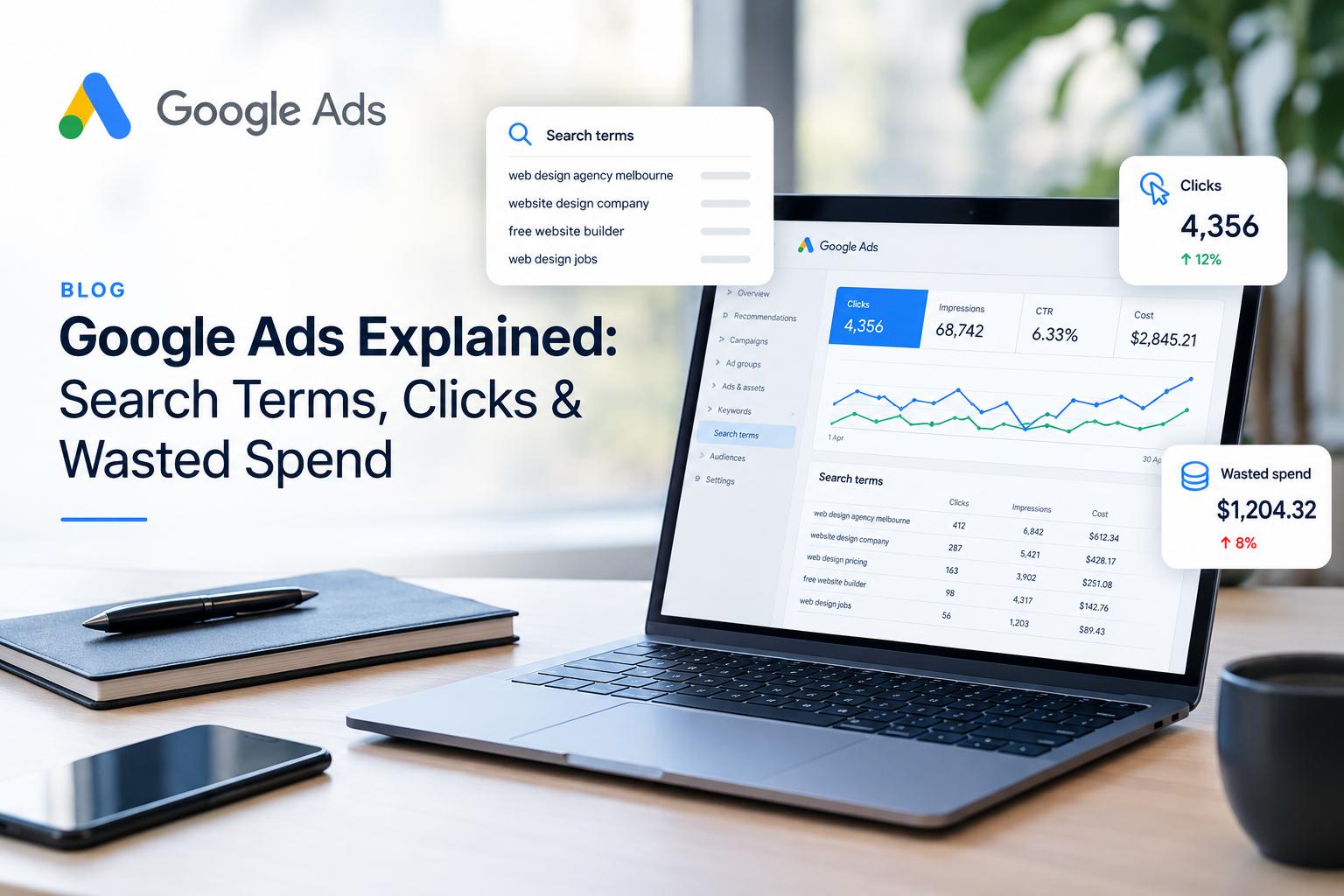
The Google Ads connection is equally direct. Google's Quality Score, which determines ad placement and cost-per-click is calculated partly based on landing page quality and load speed. A Melbourne business paying $3,000 per month in Google Ads and sending traffic to a slow, poorly structured landing page is subsidising a penalty their platform is creating. IT BOOST Australia builds landing pages and website infrastructure together, so ad spend is not working against the website it depends on.
For Melbourne businesses running both SEO and Google Ads, the platform is the shared foundation both channels rely on. Getting it wrong affects both simultaneously.
Already Have a Website? You Don't Always Need to Start From Scratch
The most common reason Melbourne businesses delay a platform upgrade is the assumption that it requires a complete rebuild. New design, new content, new everything.
That is rarely necessary.
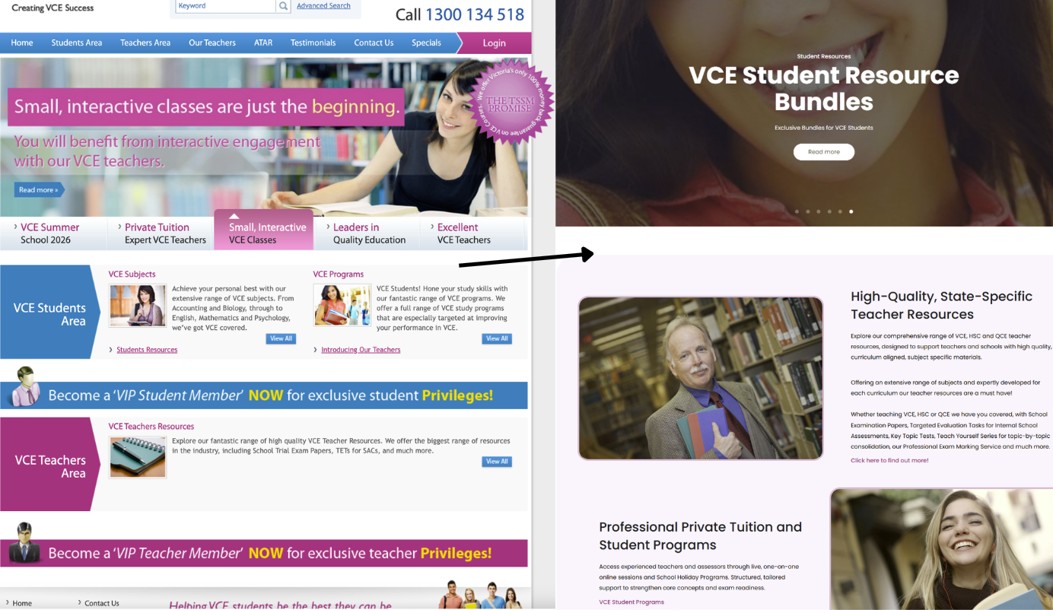
Strategic website migration preserves the existing design, branding, and content structure while rebuilding the underlying platform, code architecture, and technical infrastructure. For an established Melbourne business with recognised branding and accumulated SEO authority, migration delivers the performance and functionality improvements without the disruption of starting over.
IT BOOST Australia manages migrations with built-in SEO continuity, preserving URL structures, implementing correct redirects, and rebuilding internal linking architecture to retain accumulated domain authority. A poorly managed migration damages rankings, but a well-managed one improves them.
The question is not "do we need a new website?" It is "does the platform underneath our current website still support where the business is going?"
Building New? The Platform Decision Matters More Than the Design
For Melbourne businesses building their first serious website, the instinct is to focus on how it looks. The more consequential decision is what it runs on.
A website built on the right platform from the beginning scales with the business. A website built on the wrong platform gets replaced — usually at the worst possible time, when the business is growing and the website is the bottleneck.
The questions worth answering before any design work begins:
What functionality will customers need from this website in three years? How will leads be captured, qualified, and routed? Will the website need to connect with business systems? How important will SEO and Google Ads be to growth? Can the platform scale without expensive redevelopment?
IT BOOST Australia's approach starts with these questions before any design brief is written. The platform is selected and scoped around the answers — not around what is familiar or convenient.
How IT BOOST Australia Builds Differently
IT BOOST Australia's custom web platform removes the structural limitations that template platforms impose on growing businesses.
Core functionality such as performance, security, SEO architecture, and business-specific features is built directly into the codebase. There are no plugins for functions the platform should handle natively. Updates are deployed continuously rather than through periodic bulk releases, which eliminates the compatibility conflicts that cause template-based websites to break after updates.
The result is a website that performs faster, ranks more effectively, costs less to maintain over time, and can be extended with new functionality as the business grows without rebuilding the foundation every time requirements change.
For Melbourne businesses that have been told "that's not possible with your current platform," it usually is possible. It just requires a platform built to support it, and we can help you acheive that.
Disclaimer
This article is provided free of charge for public information. We do not guarantee, and accept no legal liability for, the accuracy, reliability, currency, or completeness of the content or any linked material. Users should apply their own judgment and verify the material’s relevance to their needs. This article is a general summary and not a substitute for legal or professional advice. Users should seek appropriate advice for their circumstances. Any third-party views expressed do not necessarily reflect ours or imply endorsement.
Terminologies used in this article
- Code
- In web development, code refers to the programming languages and instructions used to build and operate a website. Well-written code can improve website performance, security, and maintainability.
- Domain Authority
- Domain Authority is a metric that estimates how likely a website is to rank in search engine results based on factors such as backlinks and overall website authority.
- Landing Page
- A landing page is a standalone webpage created for a specific marketing campaign or business objective. It is designed to encourage visitors to complete a particular action, such as making an enquiry or purchasing a product.
- Lead Generation
- Lead generation is the process of attracting potential customers who have shown interest in a business's products or services. Common methods include online advertising, SEO, and contact forms.
- Mobile Usability
- Mobile usability refers to how easy a website is to use on smartphones and tablets. A website with good mobile usability provides clear navigation, readable content, and a smooth browsing experience across different screen sizes.
- Page Speed
- Page speed is the amount of time it takes for a webpage to load and become usable. Faster page speeds improve user experience and can positively influence search engine rankings.
- Plugin
- A plugin is a software component that adds extra features or functionality to a website without requiring changes to its core system. Plugins can be used for tasks such as contact forms, SEO tools, online bookings, and security enhancements.
- SEO
- SEO is the process of optimising your website to make sure it is available to Google Search Engine and this can be monitored through Google Search Console. By optimising website content, structure, and technical performance, businesses can attract more organic (unpaid) traffic and increase their onl…
- Website Migration
- Website migration is the process of making significant changes to a website, such as moving it to a new domain, server, platform, or design. Careful planning is important to minimise disruptions to SEO and user experience.