New Year, New Website: Why 2026 Is the Reset Businesses Need

Last updated: 2026-01-08
As we enter 2026, the gap between modern digital leaders and outdated websites is becoming impossible to ignore.
Google Search has changed. User behaviour has changed. Google’s algorithms have changed. And the digital expectations placed on enterprise-level brands are higher than ever.
What worked in 2023 or even early 2024 no longer delivers the same results. In fact, many large organisations are now finding that their existing websites and SEO setups are actively holding them back — limiting growth, inflating ad spend, and eroding long-term visibility.
At IT BOOST Australia, we’re seeing more businesses treat the new year as a moment to step back and ask an important question: Is our website actually working for us — or just existing?
Why 2026 Is a Turning Point for SEO
SEO in 2026 is no longer about ticking boxes or chasing keywords. Google’s AI-driven systems now prioritise:
- Technical performance and stability
- Clear authority and trust signals
- High-quality, experience-led content
- Fast, mobile-first user experiences
- Websites that are easy for AI systems to understand and recommend
For large organisations, this creates a challenge. Legacy platforms, bloated CMS setups, and rigid templates struggle to keep pace with these demands. Even strong brands are losing visibility because their technical foundations can’t support modern SEO requirements.
This is where the conversation shifts from “SEO tactics” to SEO infrastructure.
Why Custom Web Platforms Matter More Than Ever
In 2026, SEO performance starts long before content is published. It starts with how your website is built.
Template-based platforms may still work for small businesses, but at enterprise scale they introduce serious limitations:
- Bloated code that slows performance
- Plugin conflicts that create security risks
- Limited control over technical SEO
- Difficulty scaling content, locations, or services
- Ongoing reliance on patchwork fixes
Custom web platforms, on the other hand, are built with intent. At IT BOOST Australia, our in-house CMS and custom architecture allow enterprise clients to control exactly how their site performs, scales, and integrates with marketing systems.
This means faster load times, cleaner code, stronger Core Web Vitals, and an SEO-ready foundation that supports long-term growth — not just short-term rankings.
Why SEO Needs to Start at the Platform Level
Too many large businesses still treat SEO as something added after a website is built. In 2026, that approach simply doesn’t work.
SEO now relies on:
- Clean site architecture
- Structured data and schema
- Fast rendering and efficient crawling
- Logical internal linking at scale
- Content systems designed for growth
When SEO is embedded into the CMS and platform from day one — or introduced through a well-planned migration — the results compound over time. Rankings stabilise. Paid ads perform better. Organic traffic becomes more predictable.
This is especially critical for enterprise brands operating across multiple services, regions, or markets.
The Cost of Delaying Change
For many large organisations, the biggest risk isn’t investing in SEO or custom platforms — it’s waiting too long.
Delaying modernisation often leads to:
- Rising Google Ads costs to compensate for weak organic visibility
- Frequent technical issues that require emergency fixes
- Loss of rankings to more agile competitors
- Expensive rebuilds every 18–24 months
- Missed opportunities in AI-driven search results
In contrast, businesses that invest early in strong technical foundations tend to see lower acquisition costs, stronger brand authority, and more sustainable growth.
The Rise of Strategic Web Platform Migration (Not Full Redesigns)
One of the most interesting trends we saw in 2025 were the rise of web migration projects.
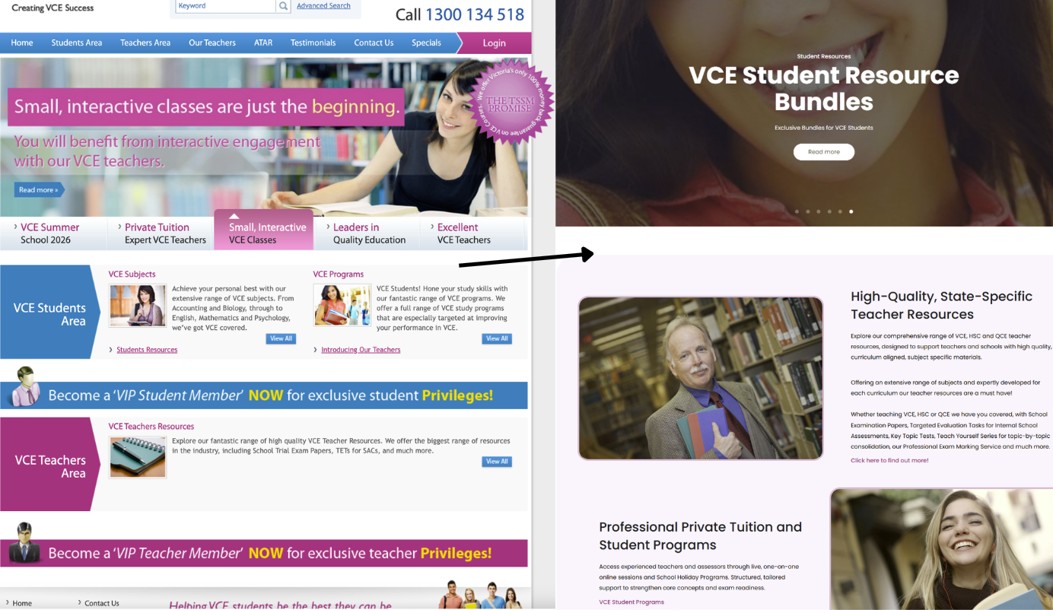
Many large businesses don’t want, or don't feel the need for a full visual redesign. What they need is everything behind the scenes to catch up with modern standards.
Over time, neglected bugs, outdated CMS versions, patchwork plugins, and ageing server environments quietly pile up. The result is slower performance, SEO limitations, security risks, and increasing maintenance headaches — often without teams realising how much these issues are holding them back.
By retaining the existing design while upgrading the CMS, server environment, and technical framework, businesses can:
- Improve site speed and stability immediately
- Unlock stronger SEO performance
- Reduce ongoing maintenance costs
- Gain better control over content and optimisation
- Prepare for AI-driven search without rebranding risk
For organisations that are cautious about budget or internal disruption, migration is a practical, lower-risk entry point into modern SEO and web performance — and often the first step toward a broader digital transformation.
Why 2026 Is the Right Time to Act
A new year represents a reset point. Google’s AI-led search environment is becoming more selective, and performance thresholds are tightening. User expectations continue to rise. Businesses that act now can position themselves ahead of competitors who are still relying on outdated platforms and fragmented SEO strategies.
Whether that means:
- A full custom website build
- A strategic CMS and server migration
- Or integrating SEO properly into an existing platform
The goal is the same: build a digital foundation that supports growth, not friction.
How IT BOOST Australia Supports Enterprise Growth
At IT BOOST Australia, we work with large businesses that need more than surface-level solutions. Our strength lies in combining software engineering, SEO, and digital strategy into one cohesive approach.
We help enterprise clients:
- Modernise outdated CMS and infrastructure
- Preserve brand equity during migrations
- Build SEO-ready custom platforms
- Reduce long-term technical and marketing costs
- Prepare for AI-driven search visibility
If your organisation is heading into 2026 with an aging website, rising ad costs, or declining organic performance, now is the time to act — before those gaps become liabilities.
Disclaimer
This article is provided free of charge for public information. We do not guarantee, and accept no legal liability for, the accuracy, reliability, currency, or completeness of the content or any linked material. Users should apply their own judgment and verify the material’s relevance to their needs. This article is a general summary and not a substitute for legal or professional advice. Users should seek appropriate advice for their circumstances. Any third-party views expressed do not necessarily reflect ours or imply endorsement.
Terminologies used in this article
- Code
- In web development, code refers to the programming languages and instructions used to build and operate a website. Well-written code can improve website performance, security, and maintainability.
- Crawling
- Crawling is the process by which search engines, such as Google, discover webpages by following links across the internet. Search engine bots, also known as crawlers or spiders, scan websites to collect information before pages can be indexed and appear in search results.
- Organic Traffic
- Organic traffic refers to visitors who find and visit a website through unpaid search engine results, rather than through paid advertisements. Strong SEO helps increase organic traffic by improving a website's visibility in search results.
- Plugin
- A plugin is a software component that adds extra features or functionality to a website without requiring changes to its core system. Plugins can be used for tasks such as contact forms, SEO tools, online bookings, and security enhancements.
- SEO
- SEO is the process of optimising your website to make sure it is available to Google Search Engine and this can be monitored through Google Search Console. By optimising website content, structure, and technical performance, businesses can attract more organic (unpaid) traffic and increase their onl…
- Site Architecture
- Site architecture refers to the way webpages are organised and connected within a website. A clear and logical site architecture makes it easier for users to navigate the website and helps search engines understand its structure.